
Family Recipes: 25 Balanced, Quick Ideas
25 balanced, family-friendly recipes ready in 30 minutes: a 7-day meal plan, batch cooking, and kid-approved tips validated by a nutrition coach.
In brief
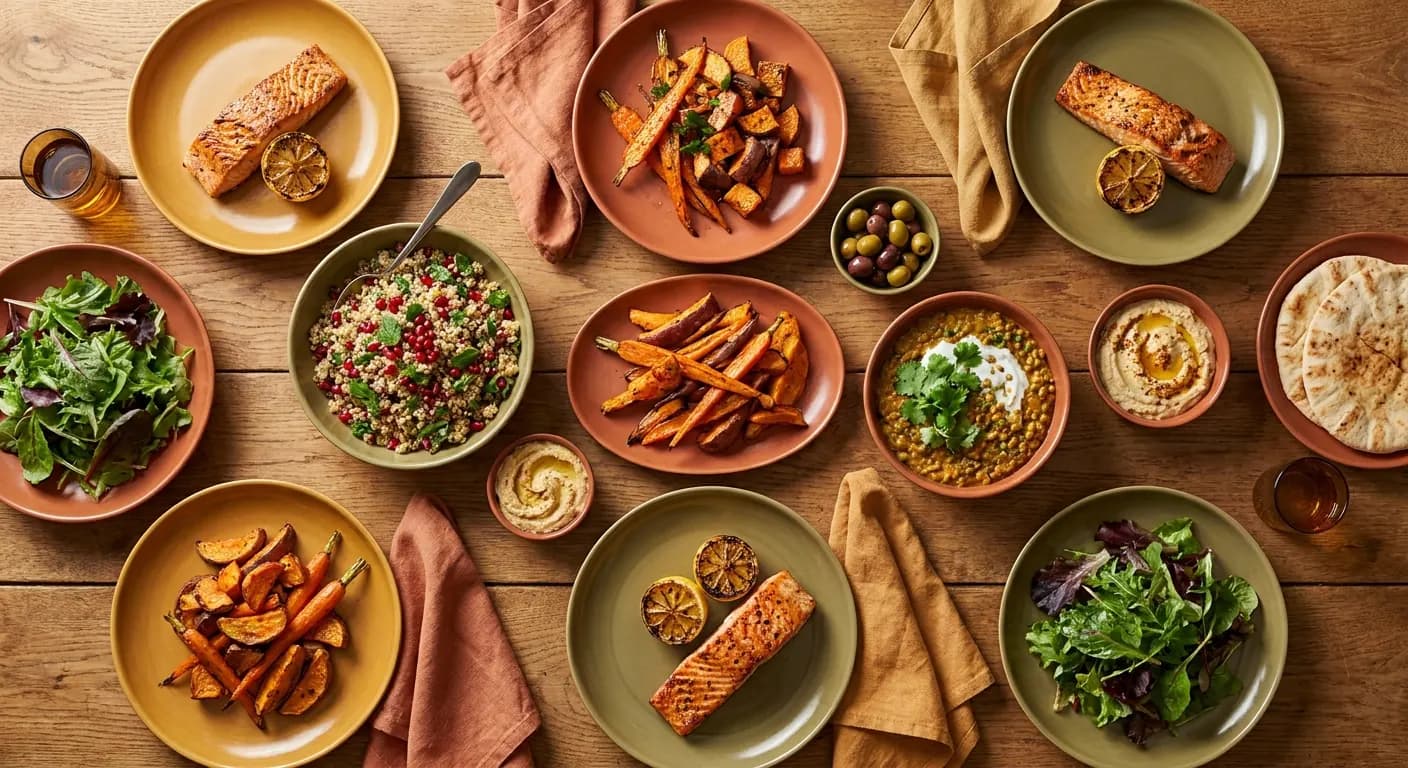
A quick, balanced family recipe comes together in under 30 minutes around the ½ vegetables, ¼ protein, ¼ whole grains rule. With 25 express ideas, a 7-day meal plan, and 90 minutes of Sunday batch cooking, you can take the mental load out of dinner without sacrificing nutritional balance.
Three nights out of five, the same question comes up in kitchens everywhere: what should we eat tonight, quickly, in a balanced way, and without a fight to clear the plate? This guide brings together 25 family recipes — balanced and ready in under 30 minutes, for the youngest to the oldest at the table — along with the method and a 7-day meal plan to reshape your dinners for good.
Key takeaway
1. Why quick, balanced family recipes will change your weeks
Dinner-time mental load has become one of the most widely shared, invisible sources of stress for parents. Between commutes, homework, sports practice, and accumulated fatigue, the pull toward ultra-processed food is enormous: according to public health data, more than 30% of family dinners now include at least one ultra-processed product, and the average time spent preparing the evening meal on weekdays has dropped below 25 minutes. The result: families eat more fat, more salt, less fiber, and energy tanks by midweek.
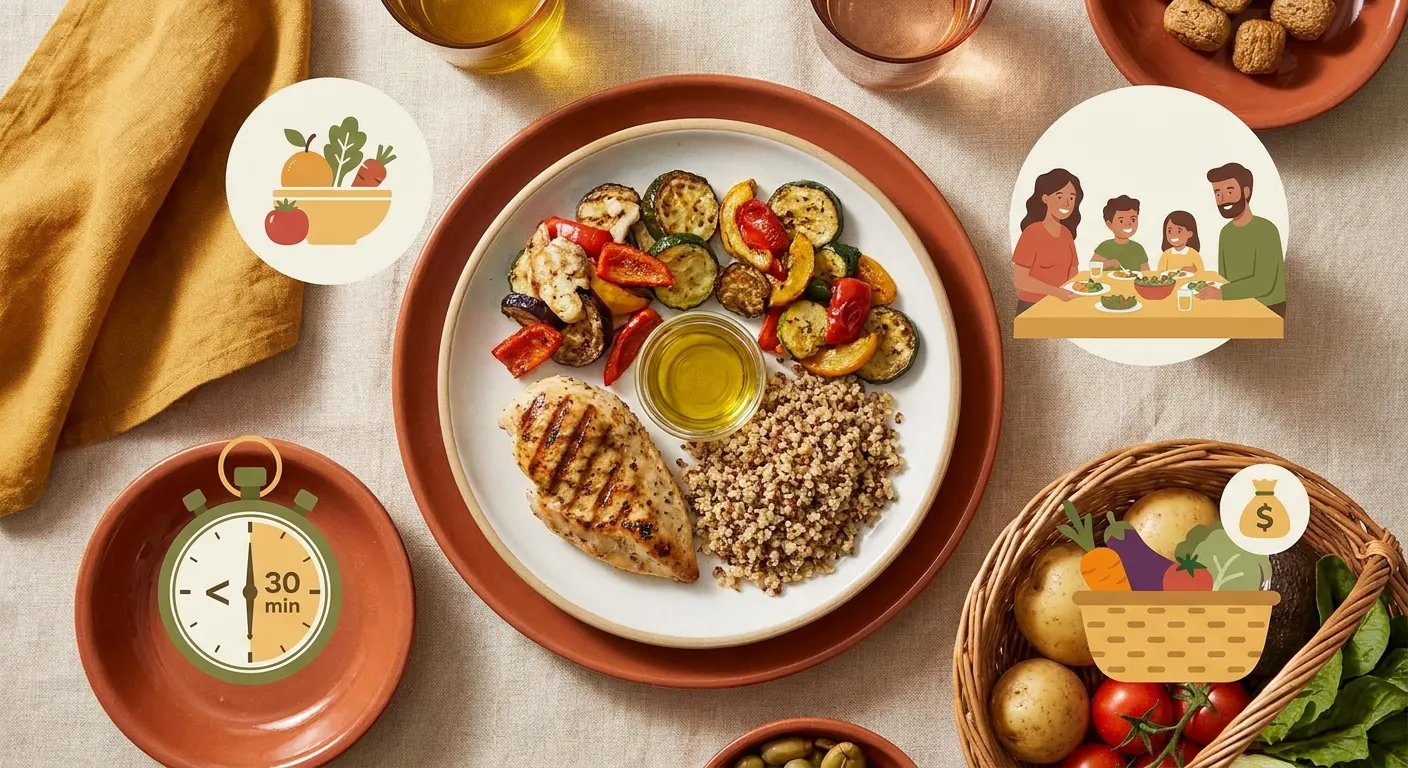
A quick, balanced family recipe isn't a luxury or a culinary feat. It's a plate built in under 30 minutes, structured around four pillars: half the plate in vegetables, a quarter in varied protein, a quarter in whole grains, and a touch of quality fat. The goal isn't perfection but consistency: three to four balanced, quick dinners a week already produce visible effects on energy, mood, and focus, for kids and adults alike.
The 4 pillars of a balanced, quick family dinner
The angle we champion here is firmly anti-diet and built to last. No deprivation, no obsessive counting, no sad plates. Quick, healthy family cooking is meant to be enjoyed and shared, and it holds up over time precisely because it doesn't demand heroic effort. It relies on a few simple habits, controlled batch cooking, and a shortlist of go-to recipes the whole household loves.
1.1 The weeknight-dinner headache: what families actually go through
At 7 p.m., the kitchen turns into a minefield. The kids are hungry, the fridge looks empty even though it's packed, your partner is angling for a pizza order, and the day's fatigue turns every small decision into an ordeal. This dinner-time mental load is well documented: it falls disproportionately on a single parent in the majority of households and costs nearly an hour of mental bandwidth every day. It's this exact mechanism that pushes people toward ultra-processed ready meals, the same frozen pizza three times a week, or food fatigue that eventually drains all the joy out of cooking.
1.2 What you gain by switching to quick, balanced dinners
The benefits of rebalancing your meals are measurable within two weeks. Energy comes back up, sleep improves, nighttime cravings fade, and the grocery bill drops by 15 to 25% compared to a diet dominated by ultra-processed foods. Above all, you build a consistency that rubs off on the kids: their palate develops, they accept more vegetables, and their focus at school benefits too.
1.3 Anti-diet, anti-frustration: the philosophy that actually lasts
Quick, healthy family cooking has nothing to do with dieting. It doesn't cut out any food group, doesn't require counting anything, and doesn't ban Friday-night cheese or Sunday pasta. It rests on one simple principle: structure the plate rather than restrict it. This sustainable approach is backed by national nutrition guidelines and holds up precisely because it preserves the pleasure, togetherness, and flexibility that family life requires.
2. The express-plate method: balancing a family dinner in 4 steps
The ½ vegetables, ¼ protein, ¼ whole grains rule is the backbone of any quick, balanced diet. It applies just as well to a parent working on weight loss as to a growing child or an endurance athlete. Its strength lies in its simplicity: no math, no scale, no endless lists. You look at the plate, estimate the proportions, and adjust. This visual method effectively replaces exhausting calorie-counting approaches and works for the whole family.
The express balanced plate in 4 steps
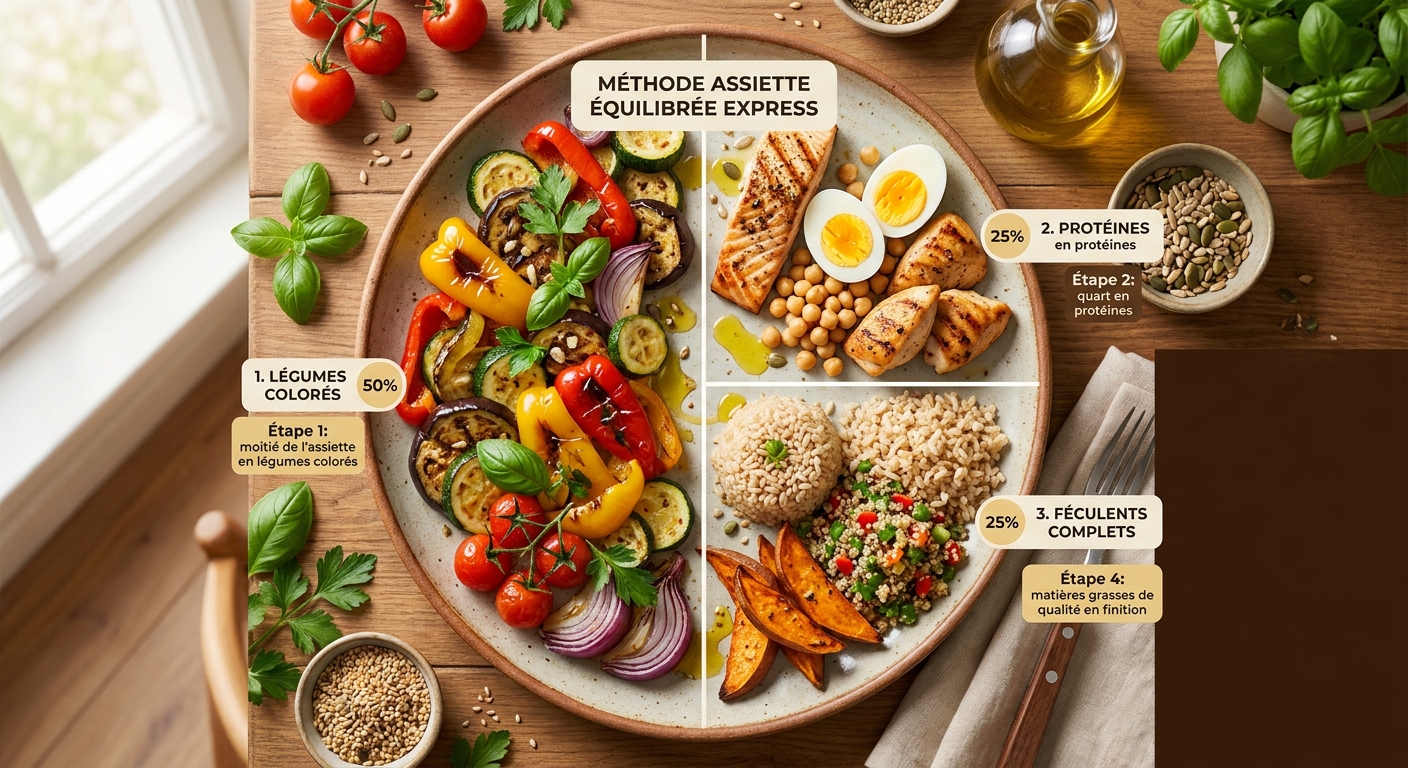
The method comes down to four steps. First, choose your vegetable base: raw veggies, roasted vegetables, steamed vegetables, homemade soup — the form doesn't matter as long as the color and quantity are there. Second, add a protein source: fish, eggs, poultry, legumes, or tofu, rotating to vary your intake. Third, fit in a whole grain: brown rice, quinoa, whole-wheat pasta, sweet potato, lentils. Fourth, season smartly: quality olive oil, lemon juice, pumpkin or sunflower seeds, fresh herbs.
Portions adjust easily depending on the person. A child aged 6 to 12 gets a smaller plate that still follows the same proportions, an athlete increases the share of protein and whole grains, and a sedentary adult working on weight loss piles on more vegetables and cuts whole grains by a third. Interactive calorie tools are available on the French version of this article to give each household member a quick estimate of their needs (see: french-language article).
2.1 ½ vegetables: the non-negotiable base of a balanced plate
Vegetables make up half of any quick, balanced plate — full stop. Fresh, plain frozen, or canned in water, they deliver fiber, vitamins, minerals, and filling volume for very few calories. Vary the colors across the week to cover the full range of polyphenols: green (spinach, zucchini, broccoli), red (tomatoes, peppers, beets), orange (carrots, squash, sweet potato), white (cauliflower, fennel, mushrooms). Plain frozen vegetables retain up to 90% of their micronutrients and are your best allies against a lack of time. A raw vegetable starter also slows the post-meal rise in blood sugar, which helps keep your energy steady through the evening.
2.2 ¼ protein: mixing meat, fish, eggs, and legumes
A quarter of the plate goes to protein, which drives satiety, muscle mass, and cell repair. Variety matters more than quantity: across the week, alternate two nights of plant-based protein (lentils, chickpeas, kidney beans, tofu), two to three nights of lean animal protein (fish, poultry, eggs), and at most one night of lean red meat. This rotation follows national dietary guidelines, boosts your fiber and non-heme iron intake, and shrinks your dietary footprint without giving up essential nutrients.
2.3 ¼ whole grains: long-lasting energy for the whole family
Whole grains take up a quarter of the plate because they release energy gradually. Brown rice, quinoa, buckwheat, bulgur, sweet potato, whole-wheat pasta, or lentils: their moderate glycemic index keeps blood sugar steady and helps avoid nighttime cravings. Kids tolerate semi-whole-grain versions very well — milder in flavor and perfect for easing the transition.
2.4 Fats and seasonings that transform a dish
Seasoning isn't a minor detail. A tablespoon of extra-virgin olive oil, a few seeds, lemon juice, fresh herbs: these finishing touches deliver the omega-3s, polyphenols, and flavors that turn a functional dish into one people actually crave. Skip the ultra-salty store-bought sauces in favor of a homemade vinaigrette, green pesto, or tahini.
3. 25 quick, balanced family recipes ready in under 30 minutes
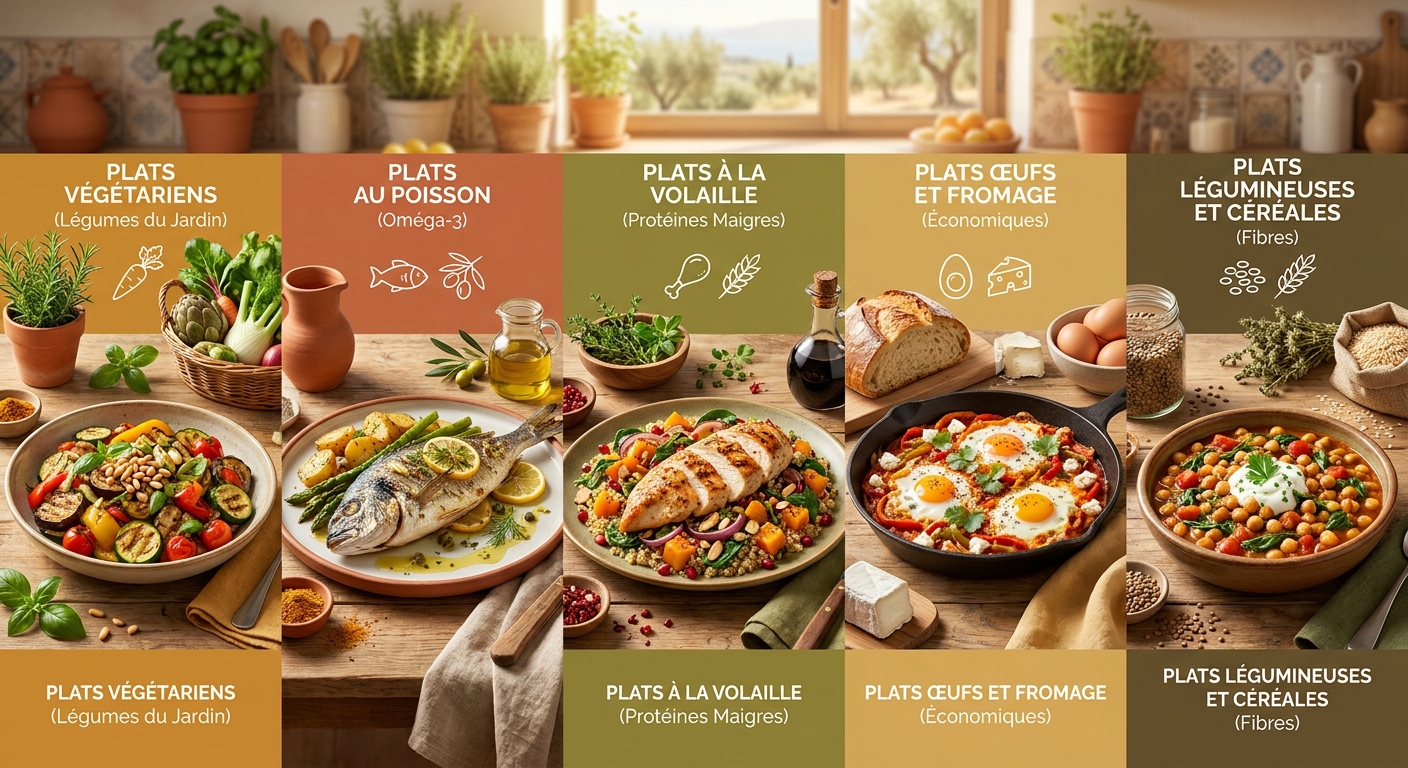
Here's the cornerstone of your week: 25 quick, balanced family recipes, organized into five categories to cover your full rotation. Every recipe takes under 30 minutes door to door, follows the balanced-plate rule, and has been tested with both kids and busy adults. The summary table below lets you choose at a glance based on the time you have, the protein you want, or your budget for the evening.
The 5 categories of quick, balanced family recipes
Comparison of 25 quick, balanced family recipes
| Recipe | Time | Protein | Grain | Nutritional highlight |
|---|---|---|---|---|
| Red lentil dahl | 25 min | Lentils | Lentils | Fiber, plant-based iron |
| Skillet gnocchi with tomato-ricotta | 20 min | Ricotta | Gnocchi | Calcium, comfort food |
| Quinoa-zucchini patties | 25 min | Quinoa | Quinoa | Complete proteins |
| Sweet potato Buddha bowl | 28 min | Chickpeas | Sweet potato | Vitamin A, fiber |
| Farmers'-market vegetable omelet | 15 min | Eggs | – | B12, choline |
| Lemon-dill salmon en papillote | 20 min | Salmon | Brown rice | Omega-3 |
| Cod with steamed vegetables | 22 min | Cod | Quinoa | Iodine, selenium |
| Whole-wheat pasta with tuna and capers | 18 min | Tuna | Whole-wheat pasta | Iron, omega-3 |
| Air-fryer breaded fish fillet | 20 min | White fish | Sweet potato | Healthy crunch |
| Salmon-zucchini skewers | 25 min | Salmon | Bulgur | Omega-3 |
| Chicken curry with zucchini | 22 min | Chicken | Basmati rice | Lean protein |
| Grilled turkey cutlet with quinoa | 20 min | Turkey | Quinoa | Tryptophan |
| Chicken and raw-veggie wraps | 15 min | Chicken | Wheat tortilla | Kid-friendly |
| Yogurt-lemon chicken skewers | 25 min | Chicken | Bulgur | Tender marinade |
| Chicken and broccoli stir-fry | 22 min | Chicken | Brown rice | Vitamin C |
| Spinach-feta frittata | 20 min | Eggs | Potatoes | Iron, calcium |
| Reinvented ham and cheese toastie, whole-wheat bread | 18 min | Ham | Whole-wheat bread | Convenient |
| Savory zucchini-ham cake | 28 min | Eggs | Whole-wheat flour blend | Family-friendly |
| Whole-wheat pasta and cheese bake | 25 min | Cheese | Whole-wheat pasta | Comfort food |
| Potato and onion tortilla | 25 min | Eggs | Potatoes | Budget-friendly |
| Quick chili sin carne | 25 min | Kidney beans | Brown rice | Fiber, iron |
| Chickpea-mint tabbouleh | 15 min | Chickpeas | Bulgur | Fresh, fiber-rich |
| Warm bulgur and chicken salad | 22 min | Chicken | Bulgur | Versatile |
| Brown rice with kidney beans and corn | 20 min | Beans | Brown rice | Caribbean-inspired, fiber |
| Green lentils with smoked sausage | 28 min | Sausage | Lentils | Iron, classic |
3.1 5 quick vegetarian dishes the whole family will love
Quick vegetarian recipes are your best allies for boosting fiber and lowering the grocery bill. Red lentil dahl with coconut milk comes together in 25 minutes and wins over even the pickiest eaters thanks to its mild sweetness. Skillet gnocchi in tomato-ricotta sauce pairs speed with creamy comfort. Quinoa-zucchini patties cook in 8 minutes in a skillet and go with any sauce. The sweet potato and chickpea Buddha bowl can be composed however your fridge allows. And the farmers'-market vegetable omelet remains the unbeatable weapon for nights when there's nothing left: 12 minutes flat, balanced, and cheap. For more ideas, check out our complete plant-based proteins guide. On the practical side, try wok-seared shrimp with light soy sauce and vegetables.
3.2 5 quick fish recipes rich in omega-3
Fish checks every box: quality protein, omega-3s, express cooking. Lemon-dill salmon en papillote cooks in 12 minutes in the oven and needs zero supervision. Cod fillet with steamed vegetables is perfect for kids' more sensitive palates. Whole-wheat pasta with tuna and capers saves the day in 18 minutes using only pantry staples. The air-fryer breaded fish fillet delivers the crunch without the deep-fry grease. Salmon-zucchini skewers turn dinner into a fun activity for kids. On the practical side, try whole-wheat pasta salad with pesto.
3.3 5 quick, flavorful poultry recipes
Poultry remains the go-to lean protein, loved by the whole family. The chicken curry with zucchini takes 22 minutes and a single wok. The grilled turkey cutlet with quinoa comes together in 20 minutes for an ultra-balanced dinner. Chicken and raw-veggie wraps are the fun Friday-night option. Yogurt-lemon marinated chicken skewers marinate the night before for extra tenderness. And the chicken and broccoli stir-fry brings an Asian-inspired touch in under 25 minutes.
3.4 5 budget-friendly, balanced egg and cheese recipes
Eggs and cheese strike the perfect balance between cost, speed, and nutrition. The spinach-feta frittata combines iron and calcium in 20 minutes. The reinvented ham and cheese toastie on whole-wheat bread is a classic given a healthier update. The savory zucchini-ham cake can be made ahead and reheats without losing flavor. The whole-wheat pasta and cheese bake brings together comfort and fiber. And the potato and onion tortilla closes out this category with an unbeatable cost per person.
3.5 5 legume and whole-grain recipes
Legumes paired with whole grains naturally form complete proteins. The quick chili sin carne cooks in 25 minutes with canned kidney beans. Chickpea-mint tabbouleh comes together in 15 minutes for warm evenings. The warm bulgur and chicken salad cleverly combines the two. Brown rice with kidney beans and corn evokes Caribbean flavors. And green lentils with smoked sausage remains a highly nutritious French classic. A single Sunday is all it takes to batch-cook these balanced recipes.
4. Adapting recipes for different needs: kids, parents, athletes
The same quick, balanced recipe never suits a growing child, a sedentary parent working on weight loss, a tired adult looking to regain vitality, or an endurance athlete in exactly the same way. The strength of quick, healthy family cooking lies precisely in how adaptable it is: you cook a single base and personalize it at the finishing stage, without preparing several different dishes. This approach avoids double-cooking, cuts the mental load, and respects everyone's specific needs.
Adapting a family recipe to 4 nutritional profiles
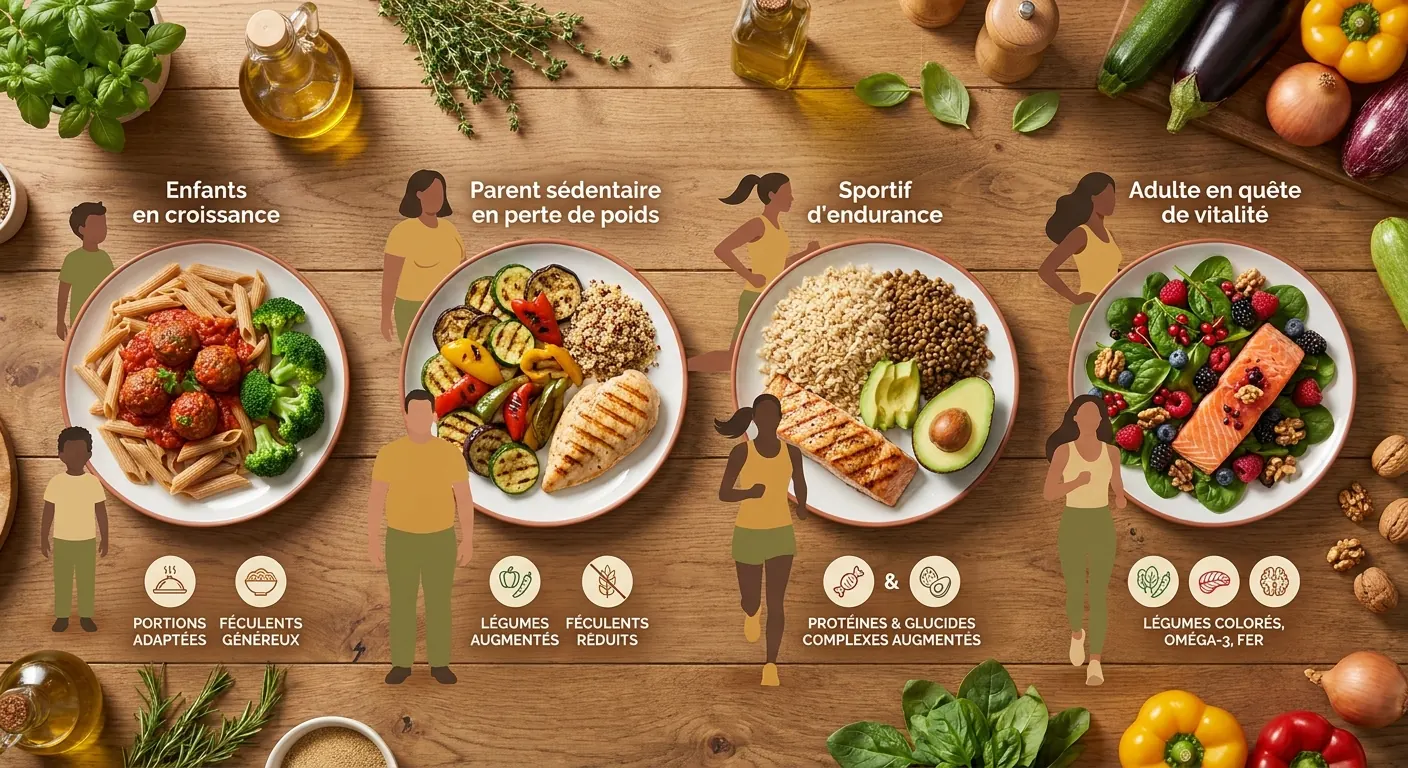
To figure out which profile matters most for you right now, think through your main goal — energy, weight management, performance, or feeding a growing child — and use the portion and add-on guidance below as your starting point. An interactive quiz that walks you through this in more depth is available on the French-language version of this article.
4.1 For kids: portions, textures, and acceptance
Children aged 6 to 12 need roughly 60% of an adult portion, but with an equivalent nutrient density. Favor melty textures (bakes, papillotes, soups), colorful plating, and letting them assemble their own plate. Repetition is your best ally: a new vegetable typically needs to be offered eight to ten times before a child accepts it, without pressure and without forcing the issue. Avoid turning mealtime into a standoff, which only turns food into a symbol of conflict. If these struggles persist, our step-by-step protocol for defusing these standoffs offers a structured, progressive approach.
4.2 For Julie, who wants to lose weight without frustration
If the goal is lasting weight loss without frustration, double the vegetable portion, cut whole grains by a third, and keep protein at a full portion to preserve satiety and muscle mass. This adjustment creates a moderate calorie deficit with no visible deprivation. Our complete guide to eating for weight loss breaks down the principles you can apply to the 25 recipes above without cooking a second meal.
4.3 For Emma, who wants to regain everyday energy
When chronic fatigue is the main issue, the priority is micronutrient density. Stack up sources of iron (lentils, spinach, lean meat) paired with vitamin C (lemon, bell pepper, tomato), always add a serving of fatty fish or nuts for omega-3s, and don't forget vitamin D in winter through eggs and fatty fish. This strategy ties directly into our guide to magnesium-rich foods.
4.4 For Lucas the athlete, who needs to dial in his macros
An endurance or strength athlete should increase protein and whole-grain portions by 30 to 50% and add a source of healthy fats (avocado, nuts, olive oil). Precise gram-level targets based on weight and activity level are available through the interactive tool on the French-language version of this article. Rotating protein sources among fish, poultry, eggs, and legumes ensures amino-acid diversity and supports recovery.
5. 7-day plan and batch cooking: organizing quick, balanced family meals
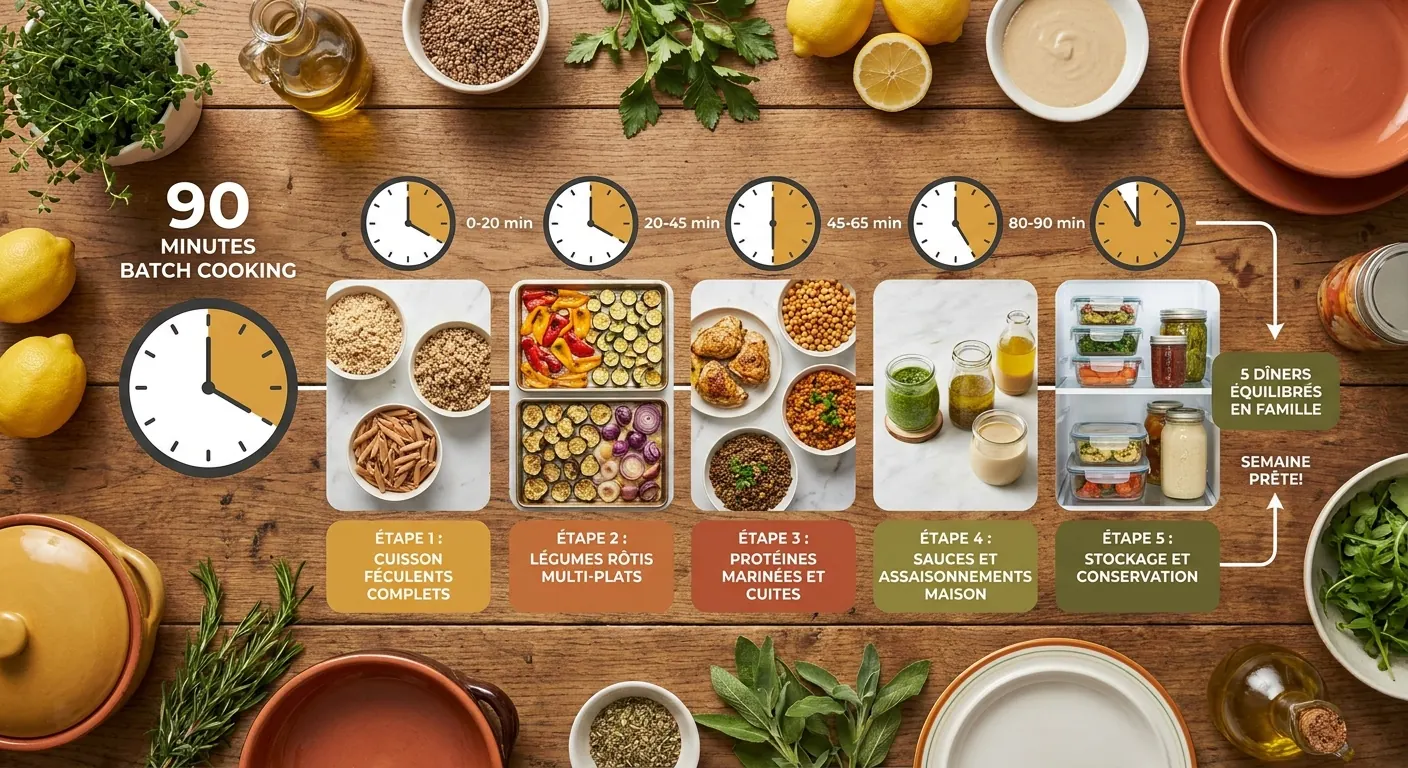
Without a plan, quick family cooking stays a nice idea and nothing more. A 7-day meal plan is the tool that turns intention into habit, eliminates the daily "what are we eating tonight" decision, and cuts off the path to ultra-processed food. Paired with 90 minutes of Sunday batch cooking, it takes care of five dinners for the week and frees up serious mental bandwidth. The mechanics are simple: you cook the components (grains, roasted vegetables, marinated proteins, sauces) on Sunday, then assemble in 15 to 20 minutes each evening. For a plan built specifically around kids, check out our balanced weekly menu for children.
90-minute Sunday batch cooking for 5 balanced dinners
5.1 A sample weekly plan for balanced, quick family meals
A well-built plan intelligently rotates protein sources, vegetable colors, and grain types across seven days. The goal isn't complexity but rotation: no more than two identical nights per week, two nights of plant-based protein, two to three nights of fish or poultry, and one flexible "empty the fridge" night. You can, of course, adapt it to the season, your household's tastes, and your schedule.
A 7-dinner plan for quick, balanced family meals
| Day | Recipe | Prepped ahead? |
|---|---|---|
| Monday | Chicken curry with zucchini + brown rice | Rice cooked Sunday |
| Tuesday | Red lentil dahl with coconut milk | Lentils soaked |
| Wednesday | Lemon-dill salmon en papillote + quinoa | Quinoa cooked Sunday |
| Thursday | Spinach-feta frittata + green salad | Salad washed |
| Friday | Empty-the-fridge night: mixed skillet or tortilla | Leftovers from the week |
| Saturday | Sweet potato and chickpea Buddha bowl | Sweet potato roasted |
| Sunday | Homemade whole-wheat pasta and cheese bake | – |
5.2 Sunday batch cooking: 90 minutes for 5 express dinners
Sunday batch cooking runs across five parallel steps. Step 1: start cooking your whole grains (rice, quinoa, lentils), which simmer unattended for 20 to 30 minutes. Step 2: put two trays of mixed roasted vegetables (zucchini, peppers, sweet potatoes, red onions) in the oven at 400°F for 25 minutes. Step 3: while that's going, marinate your proteins (yogurt-lemon chicken, miso salmon, soy-sauce tofu) and cook whichever ones need to be done ahead. Step 4: prepare two homemade sauces (green pesto, tahini-lemon vinaigrette) that keep for 5 days. Step 5: store everything in airtight containers, labeled by night. In 90 minutes, five dinners are 80% ready. Our complete batch cooking guide breaks down the method step by step.
5.3 A single grocery list and zero waste
One consolidated grocery list organized by aisle cuts your time in the store by 40% and drastically limits impulse buys. Build it from your meal plan: list proteins first, then whole grains, then vegetables by color, then fats and condiments. Favor bulk purchases (legumes, grains, nuts) and store-brand organic products to stretch your budget without cutting corners on quality. Steer clear of the ultra-processed aisles, where temptation runs highest.
Put these three pieces together — the 7-day plan, the single consolidated grocery list, and the 90-minute Sunday batch cooking routine — and the "what's for dinner" question stops being a daily decision. It becomes a habit you set once a week and simply execute.
6. Budget, seasonality, and zero waste: healthy family cooking day to day
The budget math behind quick, healthy family cooking is less daunting than you'd think. By leaning on legumes, eggs, seasonal vegetables, and a reasonable amount of animal protein, a balanced dinner under $3.25 per person becomes realistic, even with rising grocery prices. Three levers make the difference: seasonality, making the most of leftovers, and smart freezing.
Seasonal produce calendar for balanced family cooking
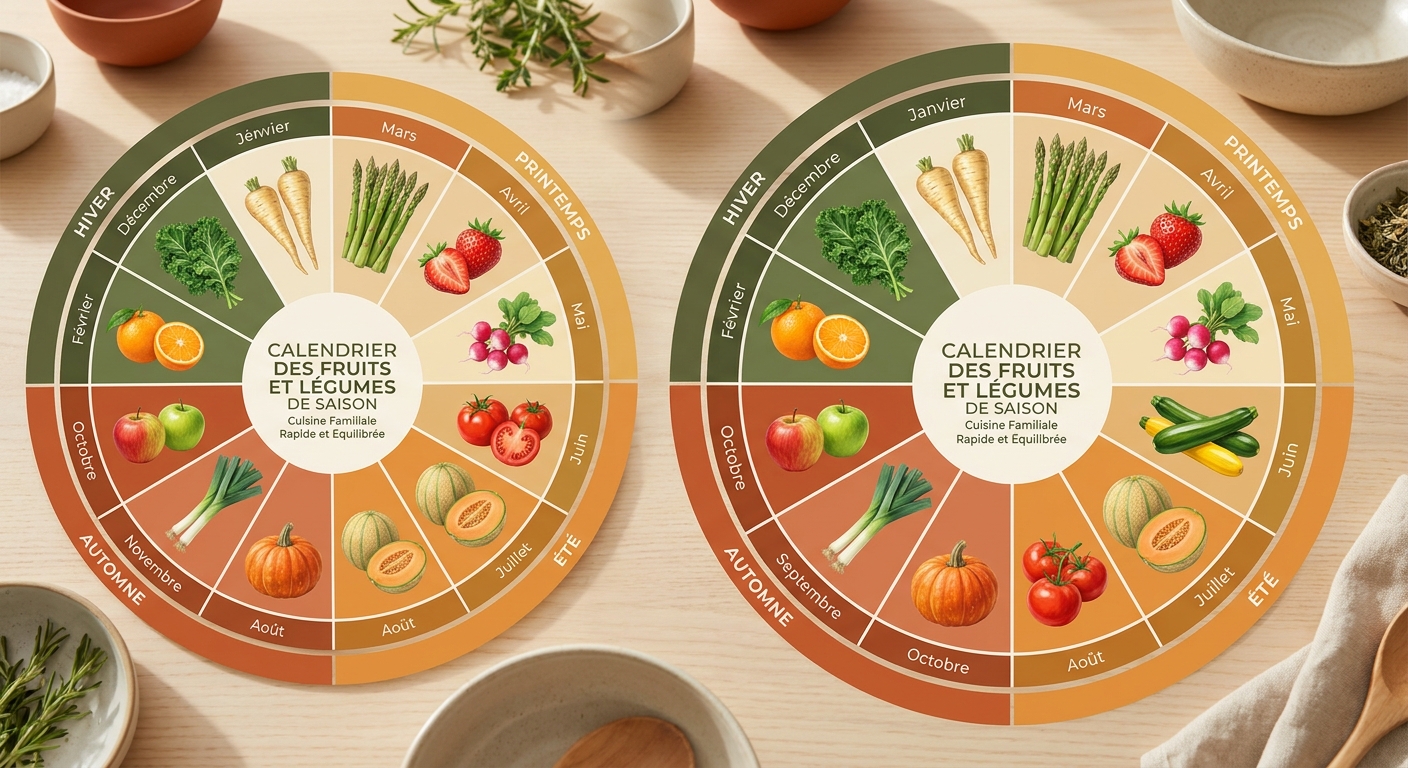
Seasonal vegetables and quick, balanced recipe ideas
| Season | Star vegetables | Matching express recipes |
|---|---|---|
| Spring | Asparagus, radishes, young carrots, peas, spinach | Spinach-feta frittata, cod and asparagus papillote |
| Summer | Tomatoes, zucchini, peppers, eggplant, basil | Tomato-ricotta gnocchi, chickpea-mint tabbouleh |
| Fall | Winter squash, leeks, mushrooms, cabbage, parsnips | Squash lentil dahl, whole-wheat pasta bake |
| Winter | Kale, carrots, parsnips, endive, mâche | Chicken and broccoli stir-fry, green lentils with sausage |
6.1 Keeping a balanced family food budget without cutting corners on quality
Sticking to a reasonable food budget without sacrificing nutritional balance comes down to a few strategic trade-offs. Cut red meat to once a week, bump legumes up to two or three times a week, buy eggs directly from a local producer when possible, and favor cheaper fatty fish (sardines, mackerel) over pricier options. Store-brand organic products often offer better value than name brands for whole grains, dried legumes, and canned tomatoes or vegetables. Plain frozen vegetables (spinach, broccoli, green beans) are nutritionally on par with fresh and cost 30% less.
6.2 Cooking with the seasons to cook better and cheaper
A seasonal vegetable typically costs 25 to 40% less than an out-of-season one, and it's more nutritious because it's picked at peak ripeness. The seasonal calendar above gives you a general reference to work from. In fall and winter, lean into squash, leeks, cabbage, and citrus; in spring and summer, on tomatoes, zucchini, berries, and fresh herbs. Farmers' markets and local produce boxes offer an excellent balance of quality, price, and freshness, especially for larger families. A seasonal, Mediterranean-style approach to eating remains the gold standard for proven health benefits.
6.3 Zero waste: turning leftovers into quick, balanced meals
Leftovers aren't trash waiting to happen — they're tomorrow's dinner, already started. A fridge-clean-out frittata can absorb pretty much any vegetable cooked the day before. A quick soup comes together in 15 minutes with two leftover vegetables and some broth. A mixed skillet turns leftover brown rice, some chicken, and a handful of cherry tomatoes into a complete dinner. The principle is simple: store components separately (grain, protein, vegetable) rather than as an assembled dish, and you multiply the number of ways you can recombine them. This approach cuts food waste by 30 to 50% per household and saves a family of four close to $500 a year.
7. Common mistakes and coach's tips for healthy, quick family meals
Seven pitfalls come up again and again with families getting started on quick, balanced cooking. Recognizing them is already half the battle. The good news: each one has a simple, immediate fix that doesn't require overhauling your whole routine. Consistency always beats perfection.
7 common mistakes to avoid for healthy, quick family dinners
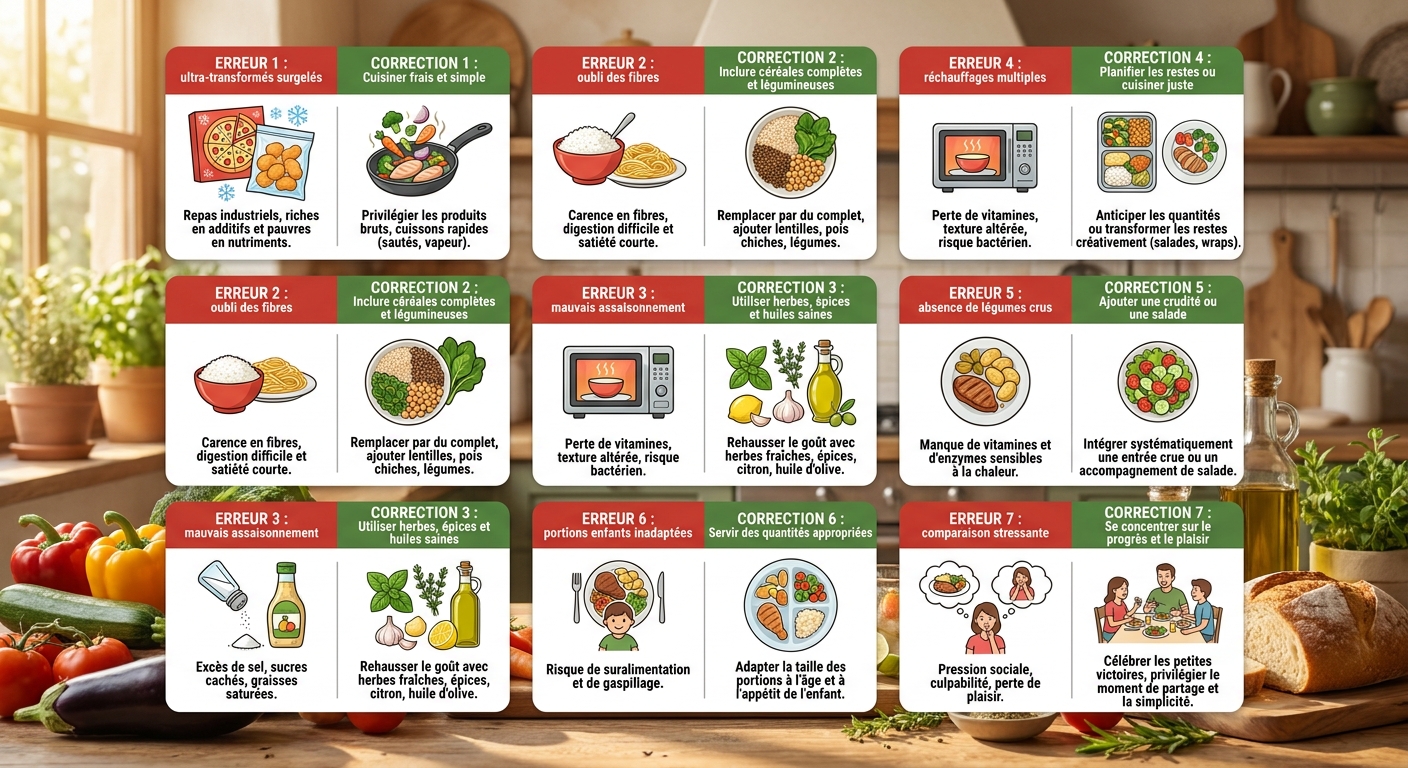
7 common mistakes and how to fix them right away
| Mistake | Quick fix |
|---|---|
| Reaching for ultra-processed frozen meals | Keep 5 quick proteins in the freezer (salmon, chicken, eggs) |
| Skipping fiber | Add legumes or whole grains to every meal, systematically |
| Under- or over-salting | Taste before adding salt; finish with olive oil and lemon |
| Reheating the same dish repeatedly | Cook the right-sized portions or freeze immediately |
| Neglecting raw vegetables | Start every dinner with a raw veggie prepped on Sunday |
| Serving kids adult-sized portions | Serve 60% of an adult portion and let them ask for more |
| Constantly comparing yourself to other families | Set a personal goal: 3 balanced dinners a week |
7.1 Nutritional traps that drain your dinners of their value
The most common nutritional traps sneak up on you. The Thursday-night frozen pizza "because we're exhausted" turns into a weekly habit. Store-bought sauces pack in salt, added sugar, and additives that cancel out the benefit of an otherwise homemade dish. Ultra-processed nuggets and breaded dishes stack up saturated fat, additives, and a lack of fiber. Sweetened fruit purees with 15% added sugar wrongly stand in for actual fresh fruit. Reheating the same dish repeatedly over three days degrades vitamins and encourages bacterial growth. Spotting these traps often means understanding where your effort is going without producing a visible result. The fix isn't banning these products outright — it's capping how often they show up to once a week, at most.
7.2 Small habits that transform your meals for good
A handful of tiny habits reshape your dinners for the long haul. Wash and cut your raw vegetables on Sunday for the whole week. Always keep two cans of legumes in the pantry. Make a week's worth of homemade vinaigrette in a jar. Cook 1 pound of brown rice or quinoa ahead of time. Buy a good block of parmesan to grate at home — it transforms any plate. Get kids involved from age 6 onward, whether it's washing vegetables or setting the table: their participation increases how readily they accept the meal. These small actions add up to a considerable compound effect over three months. For even more inspiration, browse our selection of dishes for kids.
7.3 When personalized coaching makes the difference
If you keep hitting the same walls month after month despite your best efforts, personalized coaching can significantly speed up your progress. A nutrition coach precisely diagnoses your friction points (organization, food choices, beliefs), builds a plan tailored to your family, and provides the follow-up that turns intention into a lasting habit. This investment pays for itself within a few weeks, both in energy regained and in reduced waste and greater family peace of mind.
To place these recipes within a broader strategy, our guide to balanced family nutrition covers the overall nutritional approach (intake, organization, teaching kids to enjoy new foods) that underpins these quick ideas.
Frequently asked questions
What quick, balanced recipes should I cook for the family on weeknights?
Favor dishes built around the ½ vegetables, ¼ protein, ¼ whole grains rule, ready in under 30 minutes: chicken-zucchini-quinoa skillet, cod en papillote with vegetables, red lentil dahl, spinach frittata, chicken wraps with raw veggies. Pick three go-to recipes the whole household enjoys and rotate them over two weeks to cut the mental load of dinner without giving up nutritional balance.
How do I cook balanced meals quickly for the whole family?
Start by prepping a vegetable base on Sunday (roasted vegetables, washed raw veggies, homemade soup), keep whole grains cooked ahead of time, and always have three varied protein sources on hand (eggs, fish, legumes). In the evening, you assemble a structured plate in under 20 minutes. The 90-minute Sunday batch cooking session takes care of five dinners for the week.
What quick, balanced meal ideas do kids actually enjoy?
Kids respond best to familiar recipes with a twist: whole-wheat pasta with salmon and spinach, a simple pasta bake with hidden vegetables, homemade zucchini-crust pizza, chicken wraps with raw veggies, rolled vegetable-cheese omelet, mini tomato-spinach quiches. Focus on melty textures, colorful plating, and letting kids assemble their own plate to boost how well they take to vegetables.
How do I put together a balanced family dinner in under 20 minutes?
Use the 'express plate' method: a fast-cooking whole grain (pre-cooked brown rice, whole-wheat couscous, whole-wheat pasta), a quick protein (eggs, a fish fillet, chicken strips), ready-to-use vegetables (fresh spinach, grated zucchini, cherry tomatoes), and a lively finishing touch (olive oil, lemon, fresh herbs). In 18 minutes flat, you've got a complete, balanced plate for four.
What are the best quick, balanced family dishes to cook on a tight budget?
The most cost-effective dishes, both nutritionally and financially, combine legumes, eggs, and seasonal vegetables: chili sin carne with kidney beans, red lentil dahl, vegetable frittata, whole-wheat pasta bake with cheese, chickpea tabbouleh. Average cost stays under $3 per person while easily covering fiber, protein, and micronutrient needs.
Should families prioritize batch cooking for quick, balanced recipes?
Batch cooking is especially effective for busy families: 90 minutes on Sunday lets you prep the base for 5 dinners (cooked grains, roasted vegetables, marinades, homemade sauces) and cuts daily prep time down to 15 minutes. You gain consistency, reduce waste, and rely less on ultra-processed foods mid-week.
How do I adapt the same family recipe for an athlete and a sedentary family member?
Keep the common base and personalize at the finishing stage. For the athlete, increase the protein and whole-grain portions by 30 to 50% and add a source of healthy fats (nuts, avocado). For a sedentary adult working on weight loss, double the vegetable portion, cut whole grains by a third, and keep the same amount of protein to preserve satiety and muscle mass.
Which micronutrients deserve attention in quick, balanced family dinners?
Four micronutrients deserve special attention: iron (lean red meat, lentils, spinach paired with a vitamin C source), vitamin B12 (fish, eggs, dairy), omega-3s (salmon, sardines, walnuts, canola oil), and vitamin D in winter (fatty fish, egg yolk). Vary your sources across the week rather than stacking them all into a single dish.